

Street prostitution Vienna is a topic that continues to spark debate among policymakers, residents, and social activists. While prostitution itself is legal and regulated in Austria, the practice of street prostitution raises numerous concerns related to safety, public health, and the overall well-being of communities.
Understanding why street prostitution in Vienna is considered a bad idea requires examining the social, legal, and economic implications associated with it.

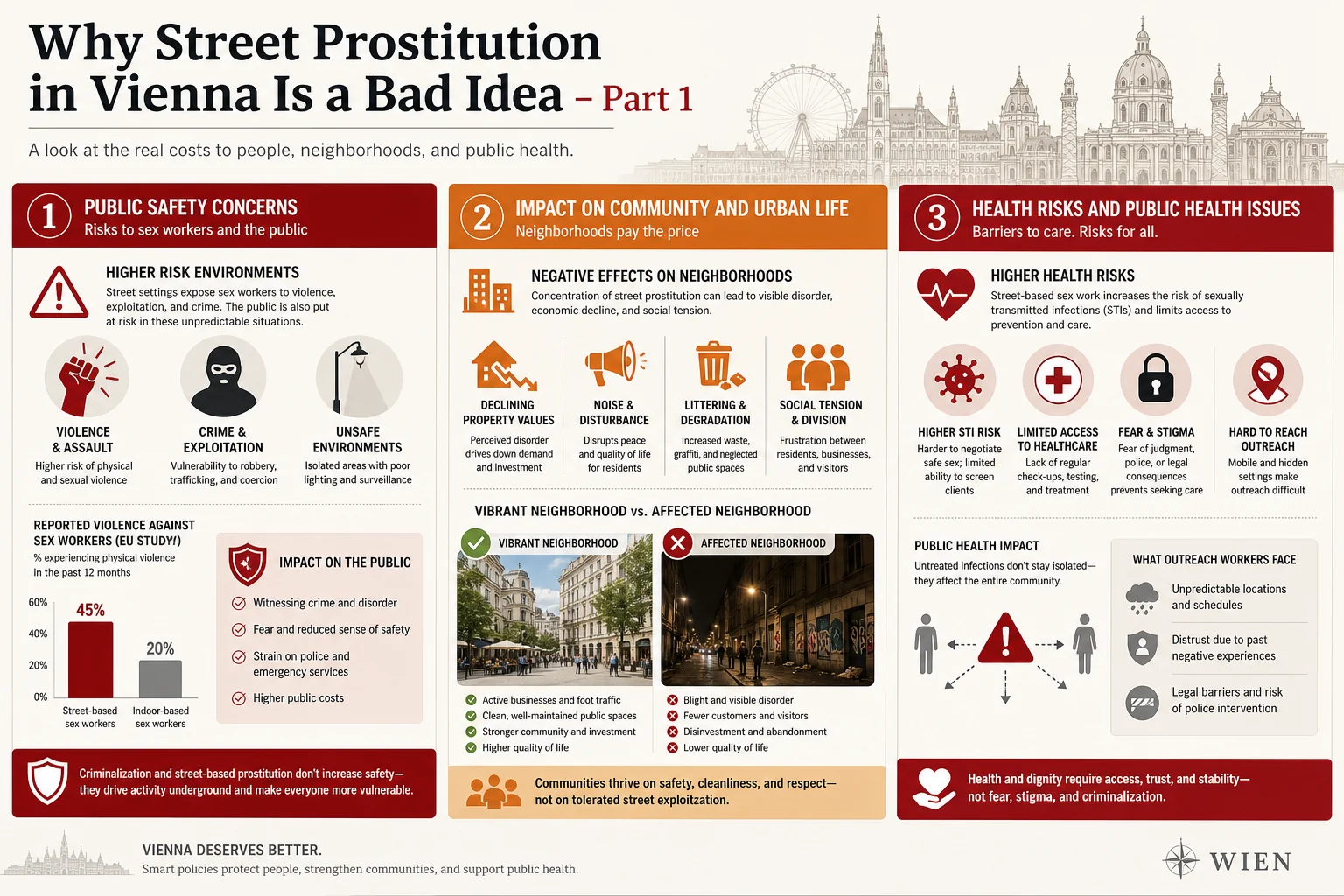
Public Safety Concerns
One of the most significant issues connected to street prostitution in Vienna is public safety. Unlike regulated indoor prostitution venues, street prostitution often occurs in less controlled environments. This lack of oversight can lead to increased risks for both sex workers and the general public.
Sex workers on the streets face heightened vulnerability to violence, exploitation, and abuse. Without the protection of an established workplace, they are more exposed to dangerous clients and criminal elements. Additionally, street prostitution can contribute to a rise in petty crime and disturbances in neighborhoods where it takes place, affecting residents’ sense of security.
Prostitution’s Impact on Community and Urban Life
Street prostitution Vienna also impacts the quality of life in local communities. Neighborhoods with visible street prostitution may experience a decline in property values and an increase in public complaints related to noise, littering, and loitering. This can deter families and businesses from establishing themselves in affected areas, leading to economic stagnation.
Moreover, the presence of street prostitution often sparks tensions between residents and sex workers, creating divisions within communities. These social frictions can undermine community cohesion and foster negative stereotypes about certain neighborhoods.
Health Risks and Public Health Issues
From a public health perspective, street prostitution in Vienna poses significant challenges. Sex workers operating on the streets may have limited access to healthcare services, including regular testing and treatment for sexually transmitted infections (STIs). The transient and informal nature of street prostitution makes it difficult to implement effective health outreach programs.
Furthermore, street prostitution can contribute to the spread of infectious diseases, not only among sex workers but also within the broader population. Ensuring safe sex practices and providing health education are more complicated without a regulated environment, increasing the risks for everyone involved.
Legal and Regulatory Challenges
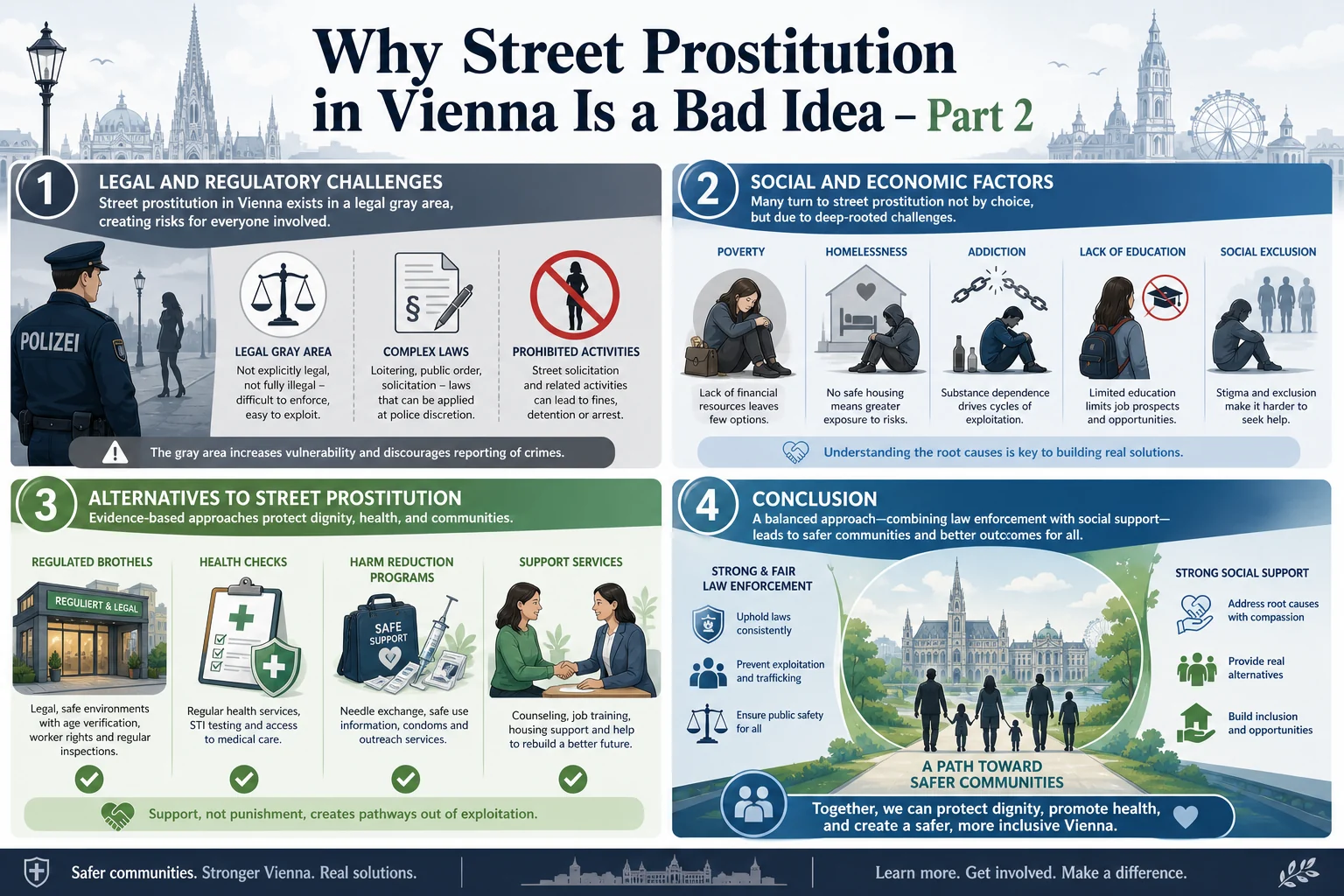
Although prostitution is legal in Austria, street prostitution falls into a gray area due to local regulations and restrictions. Vienna has specific rules that limit where and how sex work can be conducted, often prohibiting solicitation in public spaces to maintain public order.
Enforcing these laws can be difficult and resource-intensive for law enforcement agencies. The persistence of street prostitution despite legal prohibitions suggests that current policies may not effectively address the underlying issues driving individuals to work on the streets, such as poverty, lack of alternatives, or coercion.
Social and Economic Factors
Many individuals involved in street prostitution in Vienna face complex social and economic challenges. Poverty, homelessness, addiction, and lack of education often push vulnerable people into street-based sex work as a means of survival. Addressing these root causes is essential to reduce the prevalence of street prostitution.
Simply criminalizing or displacing street prostitution without providing support services can exacerbate problems. Effective solutions require comprehensive social programs, including access to housing, healthcare, and employment opportunities, to offer viable alternatives to street-based sex work.
Alternatives to Street Prostitution
Vienna has made strides in regulating indoor prostitution through licensed brothels and health checks. These measures help to ensure safer working conditions and reduce the negative impacts associated with street prostitution. Expanding support for regulated venues and providing outreach to those currently working on the streets can improve outcomes for sex workers and communities alike.
Additionally, harm reduction programs, safe spaces, and counseling services are crucial in helping sex workers transition out of street prostitution if they choose. Collaborative efforts between government agencies, NGOs, and community groups can create a more supportive environment.
Conclusion
Street prostitution Vienna presents significant challenges that affect public safety, community well-being, and public health. While prostitution itself is legal and regulated in Austria, the practice of soliciting on the streets remains problematic due to increased risks and social consequences.
Addressing these issues requires a balanced approach that combines law enforcement with social support, health services, and community engagement. By focusing on the root causes and promoting safer alternatives, Vienna can work toward reducing street prostitution and its associated problems, fostering safer and healthier neighborhoods for everyone.