

Sex work in Austria is a regulated profession, and health and safety are paramount concerns for both the individuals involved and public health authorities. One crucial aspect of regulation involves mandatory health checks to ensure the well-being of sex workers, their clients, and the broader community.
Understanding the requirements for sex worker health checks in Austria is essential for those working in the industry, healthcare providers, and policymakers. This article explores the health check protocols, legal framework, and best practices surrounding sex worker health in Austria.

Frequency and Scope of Health Checks for Sex Workers
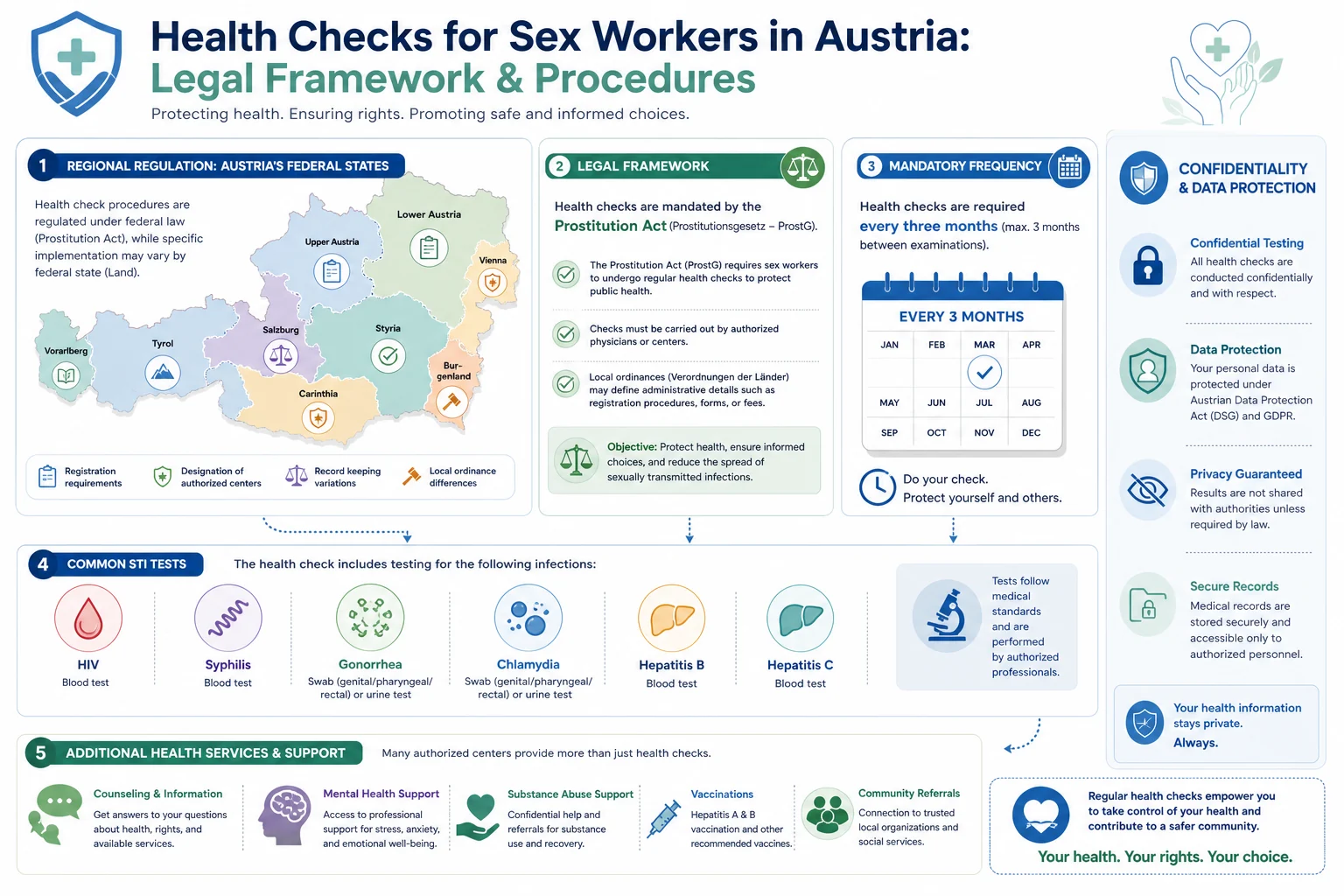
Sex worker health checks Austria typically involve regular medical examinations every three months. These check-ups include testing for common STIs such as HIV, syphilis, gonorrhea, chlamydia, and hepatitis B and C. The frequency and scope are designed to catch infections early, facilitate timely treatment, and minimize transmission risks.
During these visits, healthcare professionals conduct physical examinations and may offer vaccinations, counseling, and preventive care. The medical certificates issued after successful health checks are valid for a limited time, reinforcing the need for consistent monitoring.
Testing Procedures and Confidentiality
The testing procedures for sex workers are standardized to ensure accuracy and privacy. Tests often involve blood samples, urine analysis, and swabs from genital areas. The process is carried out by specialized clinics or designated healthcare centers familiar with the needs of sex workers.
Confidentiality is a cornerstone of the health check system. Personal data and test results are protected under Austria’s strict data protection laws. This confidentiality encourages sex workers to attend regular screenings without fear of discrimination or legal repercussions.
Additional Health Services and Support
Beyond mandatory testing, many Austrian cities offer additional health services tailored to sex workers. These include counseling on sexual health, mental health support, substance abuse programs, and access to contraception. NGOs and community organizations often collaborate with public health services to provide outreach and education.
These comprehensive services help sex workers maintain overall well-being, not just physical health, fostering a more sustainable and safe working environment.
Registration and Compliance
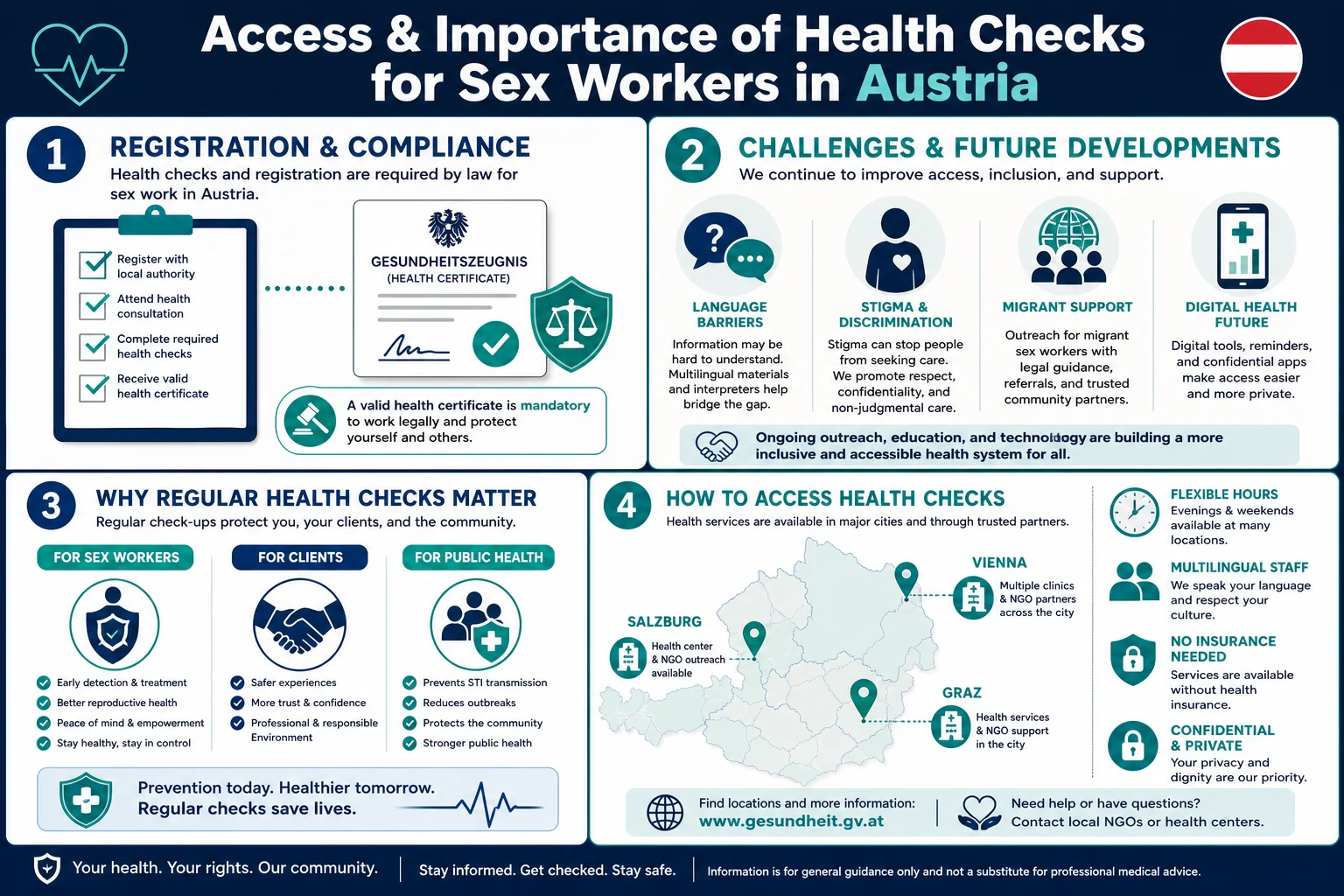
To legally work as a sex worker in Austria, individuals must register with local authorities. Registration typically requires proof of a valid health certificate obtained through the required health checks. This system ensures that sex workers who are active in the industry meet health standards and reduces illegal or unmonitored activities that could pose public health risks.
Failure to comply with health check requirements can lead to fines, suspension of work permits, or other legal consequences depending on the region. Therefore, staying informed and compliant is essential for those involved in sex work.
Why Regular Health Checks Are Essential
Regular health checks are vital not only for detecting and treating infections early but also for promoting safe sexual practices. For sex workers, these checks provide an opportunity to discuss prevention strategies, access vaccinations, and receive personalized health advice.
Clients benefit indirectly as well, knowing that sex workers have up-to-date health certifications reduces anxiety and promotes trust. Furthermore, these health checks contribute to public health goals by limiting the spread of STIs within the wider population.
How to Access Health Checks as a Sex Worker in Austria
Sex workers can access health checks through various means. Specialized clinics in major cities like Vienna, Graz, and Salzburg offer dedicated services. Many of these clinics operate with flexible hours and culturally sensitive staff to accommodate the diverse needs of sex workers.
Additionally, some NGOs provide mobile health units and outreach programs that bring services directly to sex workers in their workplaces. Booking appointments is usually straightforward, and many clinics do not require health insurance for these specific checks, improving access for uninsured individuals.
Conclusion
Sex worker health checks in Austria form a critical part of the country’s approach to regulating and supporting the sex industry. By mandating regular health screenings, protecting confidentiality, and offering additional health services, Austria aims to foster a safe and healthy environment for sex workers and their clients.
Understanding these requirements helps sex workers comply with the law and maintain their health. For policymakers and healthcare providers, ongoing improvements to accessibility and support services remain essential to addressing challenges and enhancing the effectiveness of health monitoring in this sector.