

When encountering the term “laufhaus,” many people may wonder about its meaning and origin. While the word might seem unfamiliar at first, it holds specific cultural and linguistic significance, especially in German-speaking countries.
Understanding the laufhaus meaning requires a look into its etymology, context, and the way it is used today. This article explores the full scope of the term, shedding light on what it really means and how it fits into modern society.

Origin and Etymology of Laufhaus
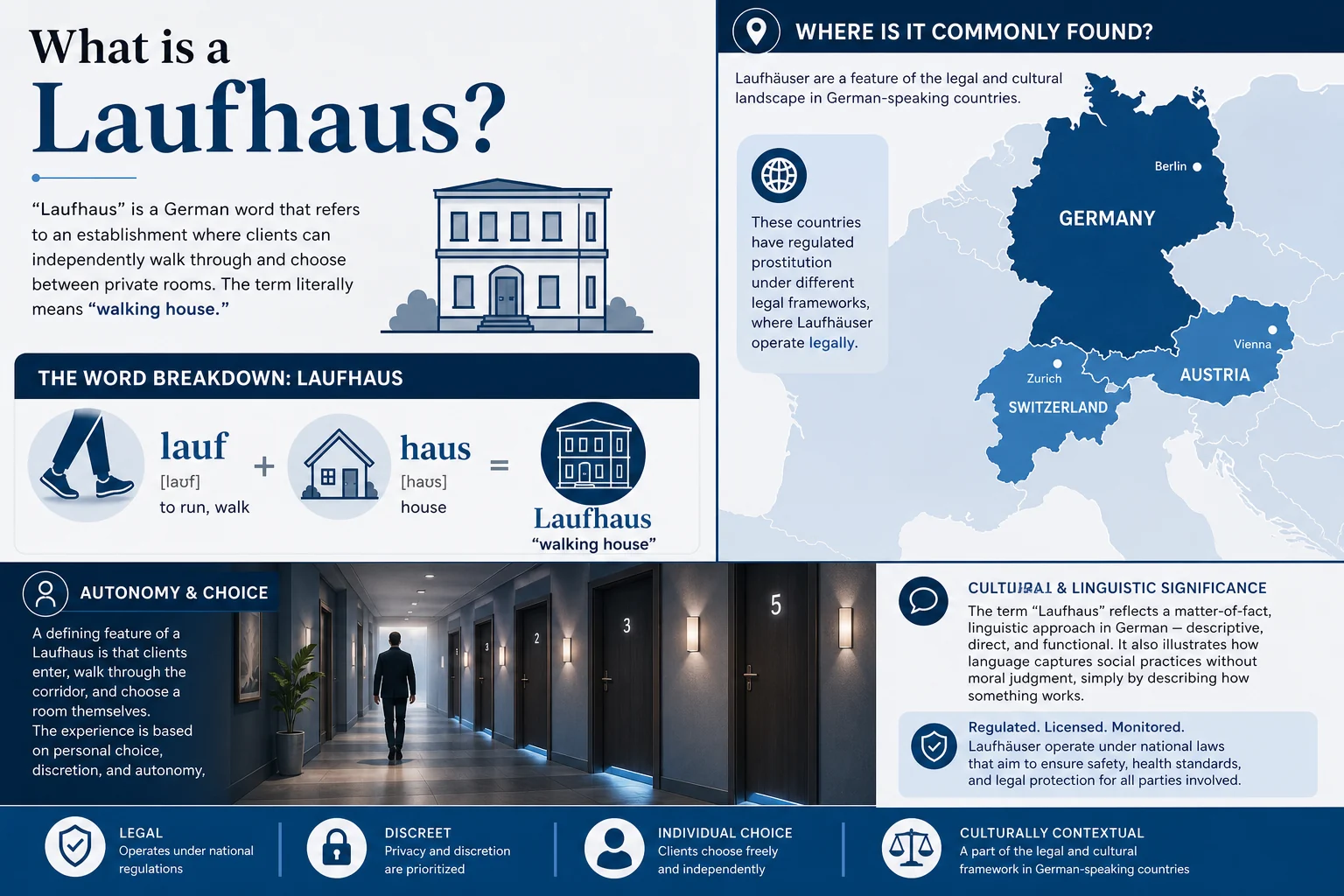
The word “laufhaus” is of German origin, combining two elements: “lauf,” meaning “run” or “walk,” and “haus,” meaning “house.” Literally translated, it means “walking house” or “running house.” However, this direct translation doesn’t convey the actual significance of the word in everyday usage.
In German-speaking regions, a laufhaus refers to a specific type of establishment, often associated with the adult entertainment industry. The term itself has evolved over time, but its roots can be traced to the way the business operates—clients walk through the building, choosing from various rooms where workers offer their services. This walking or moving nature is reflected in the name.
What Does Laufhaus Mean in Practical Terms?
In a practical sense, a laufhaus is a type of brothel where sex workers rent individual rooms or apartments within a shared building. Unlike traditional brothels where clients might be directed or escorted to a particular room, a laufhaus allows clients to freely walk through the corridors, knocking on doors or signaling workers directly.
This open and self-service style distinguishes laufhauses from other establishments. Clients can take their time to select a worker based on personal preferences, prices, and availability. This model provides a degree of autonomy both for the workers and the customers, making it a unique concept within the adult industry.
The Cultural Context of Laufhaus
Laufhauses are most commonly found in countries like Germany, Austria, and Switzerland, where prostitution is legalized and regulated. In these countries, the laufhaus model is integrated into the legal framework, ensuring certain standards of safety, hygiene, and workers’ rights.
The laufhaus meaning also ties into cultural attitudes toward prostitution in these regions. Unlike many other parts of the world where sex work is stigmatized or criminalized, German-speaking countries often approach it with a pragmatic and regulated mindset. This perspective allows laufhauses to operate openly, contributing to public health and safety efforts.
How Does a Laufhaus Operate?
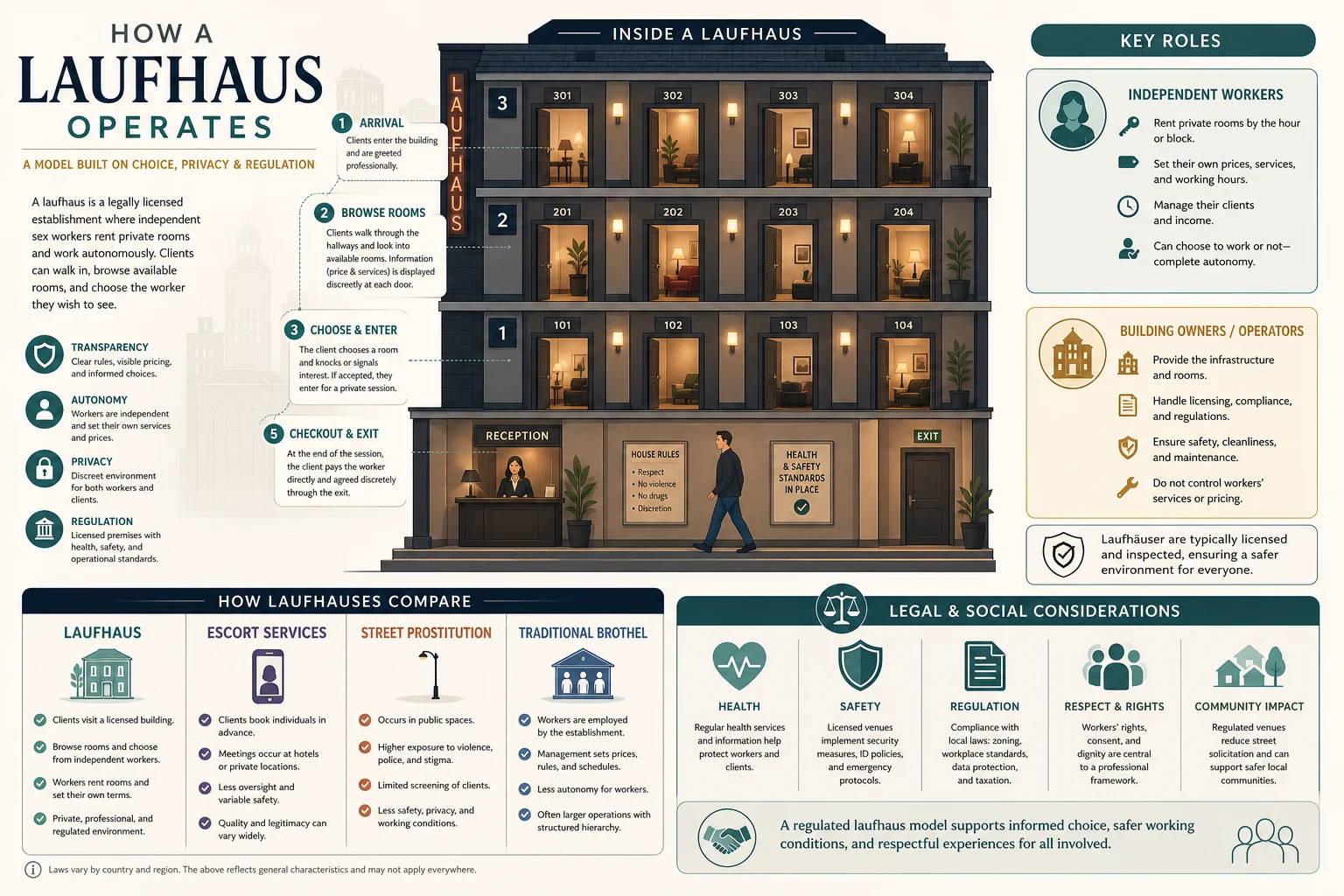
Typically, a laufhaus is a multi-story building with numerous rooms available for rent by sex workers. Each worker manages their room, setting their prices and working hours independently. The building owner usually provides the infrastructure—security, cleaning, and maintenance—while the workers handle their client interactions.
Clients enter the laufhaus and walk up and down corridors, engaging with workers who may be visible in doorways or behind windows to showcase availability. This layout encourages transparency and choice, allowing clients to make decisions without pressure or intermediaries.
Laufhaus Meaning Compared to Other Brothel Types
It’s important to distinguish laufhauses from other brothel types such as escort services, street prostitution, or classic sex clubs. Laufhauses offer a middle ground where sex work is centralized in one location but still maintains a degree of independence for workers.
- Escort services: Typically involve sex workers meeting clients at various locations outside a fixed venue.
- Street prostitution: Occurs in public spaces and is often unregulated.
- Traditional brothels: Usually have a manager or organizing client-worker matches.
- Laufhauses: Workers rent rooms and clients browse independently.
This difference highlights the laufhaus meaning as a concept that blends autonomy with structure, offering benefits to both workers and clients.
Legal and Social Considerations
Since laufhauses operate in countries where prostitution is legal, they are subject to local laws and regulations. These often include health checks, licensing requirements, and safety protocols. The goal is to protect workers from exploitation and ensure a safer environment for everyone involved.
Socially, laufhauses may still carry some stigma, but their acceptance in certain European countries marks a shift toward more open and regulated approaches to sex work. This acceptance also influences public perceptions and policies surrounding the industry.
The Modern Relevance of Laufhaus
In today’s world, the laufhaus meaning extends beyond just its literal and historical context. With the rise of digital platforms and changing societal attitudes, the way people engage with adult services is evolving. However, the laufhaus model remains relevant for those who prefer the transparency and autonomy it offers.
Moreover, laufhauses continue to serve as a unique example of how adult entertainment can be managed responsibly within a legal framework. They illustrate the potential for balancing commercial interests, worker rights, and client satisfaction in a complex industry.
Conclusion
Understanding the laufhaus meaning requires more than a simple translation. It involves recognizing the cultural, legal, and operational aspects that define this type of establishment. Laufhauses represent a distinctive approach to sex work, emphasizing autonomy, transparency, and regulation. Whether viewed through a linguistic lens or a social perspective, the term offers insight into how adult services are structured in some parts of the world.
By appreciating the nuances behind the laufhaus meaning, readers can gain a clearer picture of this unique institution and its place in contemporary society.
Click here to read the comparison of the major laufhauses in Vienna.