

When exploring unique cultural and social concepts, you might come across the term “laufhaus.” If you’re wondering what is a laufhaus, this article will provide a clear and beginner-friendly explanation.
Laufhaus establishments have a specific setup and function, especially prominent in certain parts of Europe. Understanding what a laufhaus is helps demystify how these places operate and their role within adult entertainment industries.

Defining Laufhaus: What Does the Term Mean?
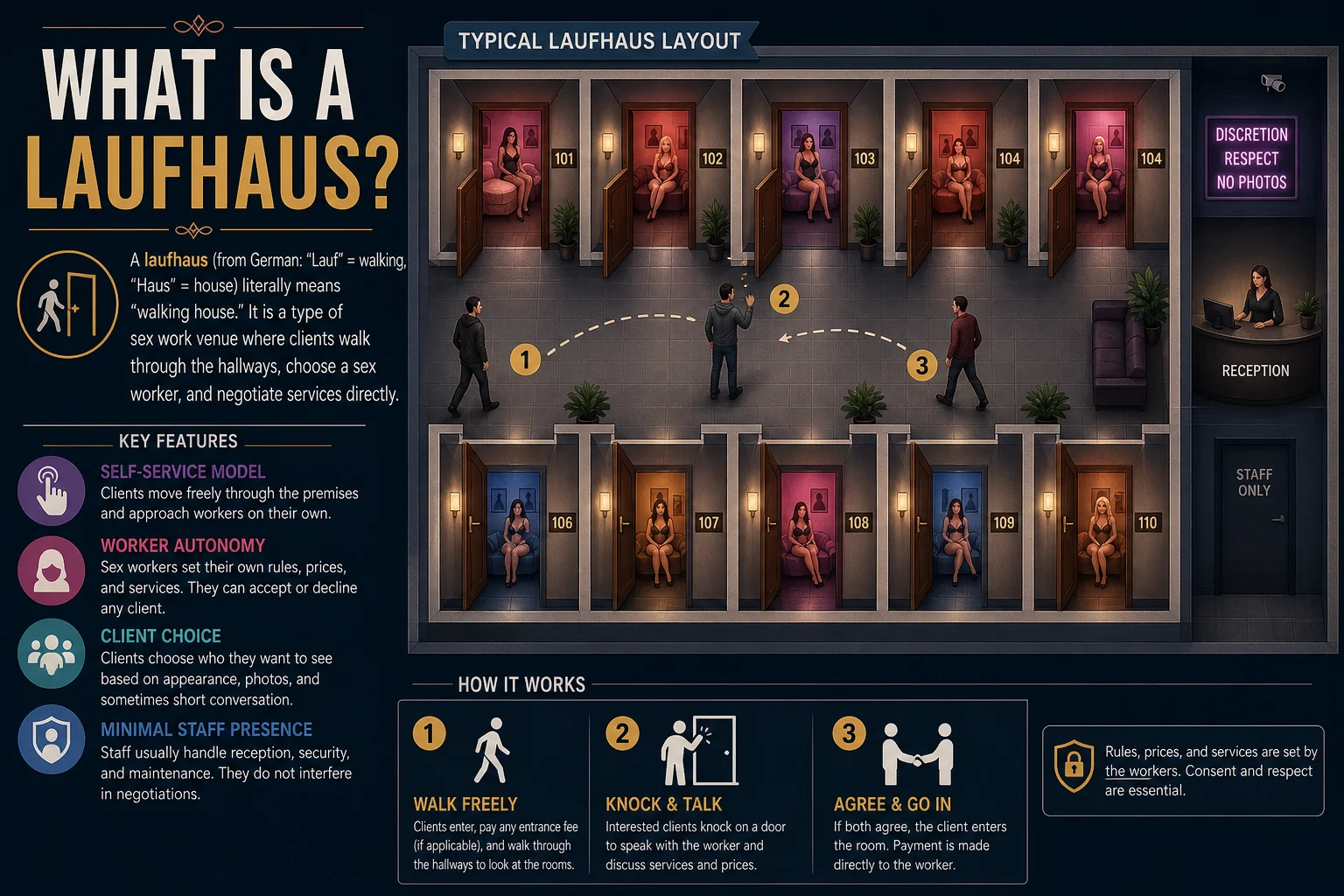
The word “laufhaus” originates from German, where “lauf” means “walk” or “run,” and “haus” means “house.” Together, the term translates to “walking house.” This name hints at the unique way customers navigate these establishments. Unlike traditional brothels where clients are escorted to a room by staff, a laufhaus allows visitors to walk freely through corridors where sex workers advertise their services from their own rooms.
Essentially, a laufhaus is a type of brothel, but one that operates on a more open and self-service model. It’s a commercial building where multiple sex workers rent rooms to offer their services. Clients can walk along hallways, knock on doors, and negotiate directly with the workers. This setup creates a marketplace-like environment within the building.
How Does a Laufhaus Work?
The key feature of a laufhaus is its self-service approach. Instead of receiving help from reception or intermediaries, clients independently browse the rooms, checking availability and prices posted outside each door. This open access fosters direct communication and autonomy for both the workers and customers.
Sex workers pay rent for their rooms, keeping full control over their clientele and services offered. The laufhaus owner typically charges a fixed fee or percentage of the rent but does not get involved in individual transactions. This separation helps workers maintain independence and reduces managerial interference.
Clients appreciate the ability to discreetly explore options at their own pace, choosing based on personal preferences. The atmosphere in a laufhaus is often casual and straightforward, with minimal staff presence apart from security and reception for safety and administrative tasks.
Where Are Laufhauses Common?
Laufhauses are mostly found in German-speaking countries such as Germany, Austria, and Switzerland, as well as neighboring regions in Central Europe. They have become a recognized model for regulated sex work, especially in cities with legalized prostitution.
In these countries, prostitution is often legal and regulated, with laufhauses operating under specific licenses and health regulations. This framework helps ensure safer working conditions for sex workers and promotes transparency for clients.
While less common outside Europe, similar concepts exist globally under different names. The laufhaus model’s emphasis on independence and transparency has contributed to its popularity where legal conditions allow.
Benefits of the Laufhaus Model
The laufhaus setup offers several advantages for both sex workers and clients:
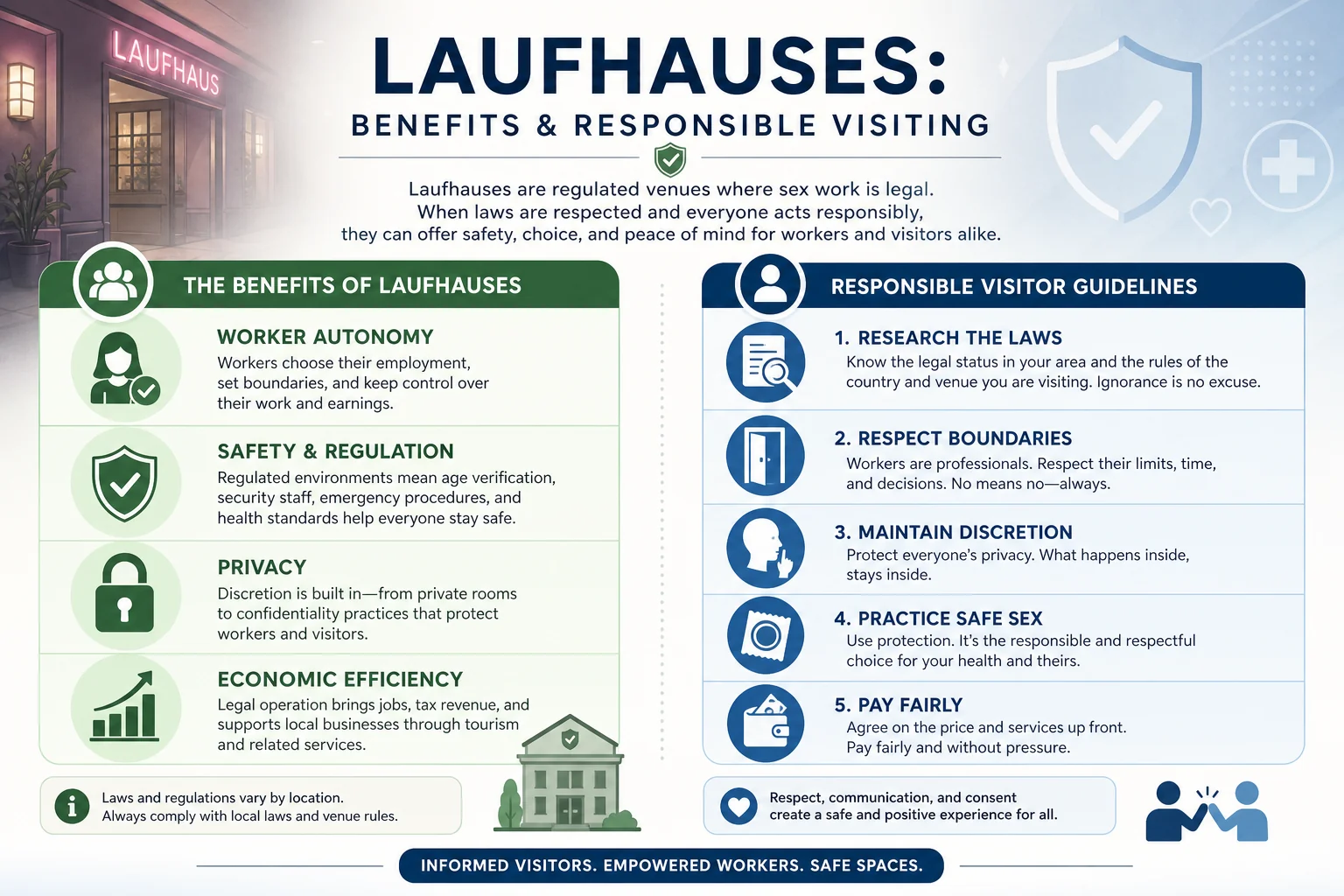
- Worker autonomy: Sex workers manage their own schedules, prices, and services without managerial pressure.
- Client choice: Visitors can see the workers directly, ask questions, and make informed decisions without intermediaries.
- Safety and regulation: Laufhauses often operate within legal frameworks, including health checks and security measures.
- Privacy and discretion: The layout allows clients to move anonymously and select workers privately.
- Economic efficiency: Workers only pay rent, keeping their earnings and reducing exploitation risks.
These factors contribute to laufhauses being considered a more ethical and transparent form of sex work compared to unregulated or hidden alternatives.
Common Misconceptions About Laufhauses
Because laufhauses are not widely known outside certain regions, misconceptions often arise. Here are some clarifications:
- Not all prostitution involves force or trafficking: Laufhauses typically operate legally, with consenting adults choosing their work.
- It’s not a hotel or typical apartment complex: Laufhauses are specifically designed for sex work, with dedicated rooms and facilities.
- Clients are not obligated to buy services: Browsing and negotiation happen freely without pressure.
- Laufhauses are regulated businesses: They comply with local laws, health standards, and safety protocols.
Understanding these points helps reduce stigma and promotes a more informed view of laufhauses.
How to Visit a Laufhaus Responsibly
If you’re curious about visiting a laufhaus, it’s important to approach it with respect and awareness. Here are some tips:
- Research local laws: Prostitution laws vary widely. Ensure that laufhauses are legal and regulated in your area or travel destination.
- Respect workers’ boundaries: Consent and clear communication are essential. Never pressure or harass anyone.
- Maintain discretion: Laufhauses value privacy for both workers and clients. Avoid taking photos or sharing personal information.
- Practice safe sex: Follow recommended health guidelines and use protection.
- Pay fairly: Honor agreed-upon prices and avoid negotiation tactics that undermine workers’ earnings.
By following these principles, you contribute to a safer and more positive environment for everyone involved.
Summary
So, what is a laufhaus? It is a uniquely structured brothel where sex workers rent rooms and clients walk freely through the building to select services directly. Originating in German-speaking countries, laufhauses emphasize autonomy, safety, and transparency in sex work.
Understanding how laufhauses operate helps to foster a more informed and respectful view of this adult industry model. Whether you are curious or considering visiting, knowing the basics enables responsible and ethical engagement with laufhauses.