

Laufhauses are brothel where sex workers rent rooms to offer their services independently. Understanding whether Laufhaus legal Austria status is clear-cut or ambiguous requires a dive into Austrian laws, local regulations, and societal attitudes toward sex work.

Understanding What a Laufhaus Is
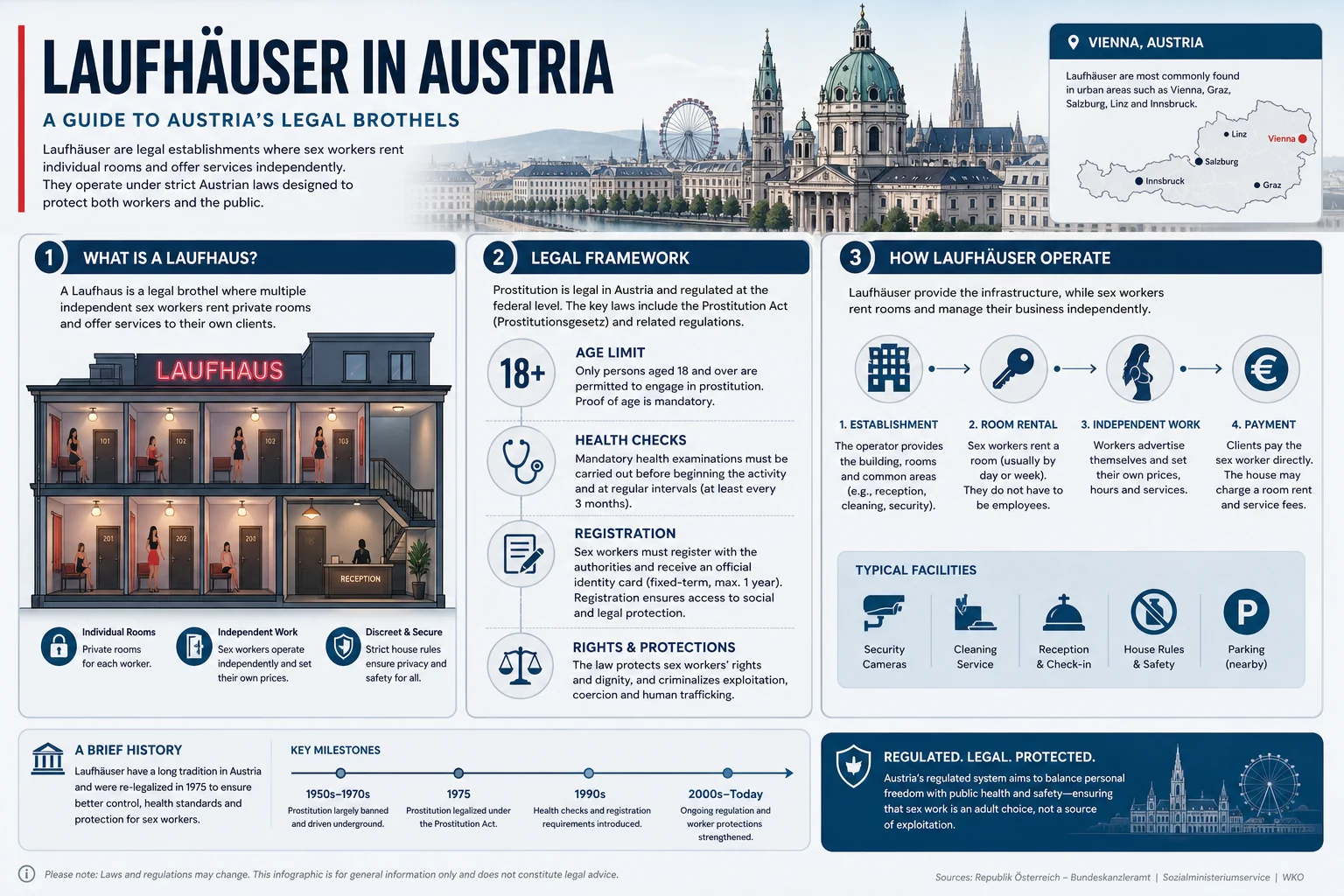
A Laufhaus, which translates roughly to “walking house,” is a type of brothel where sex workers operate individually within a larger building. Unlike traditional brothels with centralized management of services, Laufhauses function more like rental properties where each worker controls their room and clientele. This setup provides a level of autonomy for sex workers, often seen as an advantage within the industry.
These establishments are commonly found in various Austrian cities, especially in Vienna, where the sex industry is more visible and regulated. Laufhauses are usually discreet in appearance, blending into urban environments like regular apartment buildings.
The Legal Framework Governing Laufhauses in Austria
The legality of Laufhauses in Austria is complex but generally accepted under the country’s regulatory system for sex work. Prostitution itself is legal and regulated in Austria, but the laws vary by federal state, making local regulations crucial.
At the federal level, Austrian law permits prostitution under specific conditions, including age restrictions, health checks, and registration requirements. Sex workers must be at least 18 years old and undergo regular medical examinations to prevent the spread of sexually transmitted infections.
How Laufhauses Fit into Austrian Law
Laufhauses operate within this regulated framework by providing a space where sex workers can legally rent rooms without being employed by the establishment. This arrangement means the operators of Laufhauses typically do not manage or directly profit from the sex services themselves, reducing legal risks related to pimping or human trafficking laws.
However, Laufhauses must comply with local zoning laws, licensing requirements, and health and safety regulations. Authorities often require the owners to register the premises as commercial properties and ensure they meet building and fire codes.
Variations in Regional Regulations
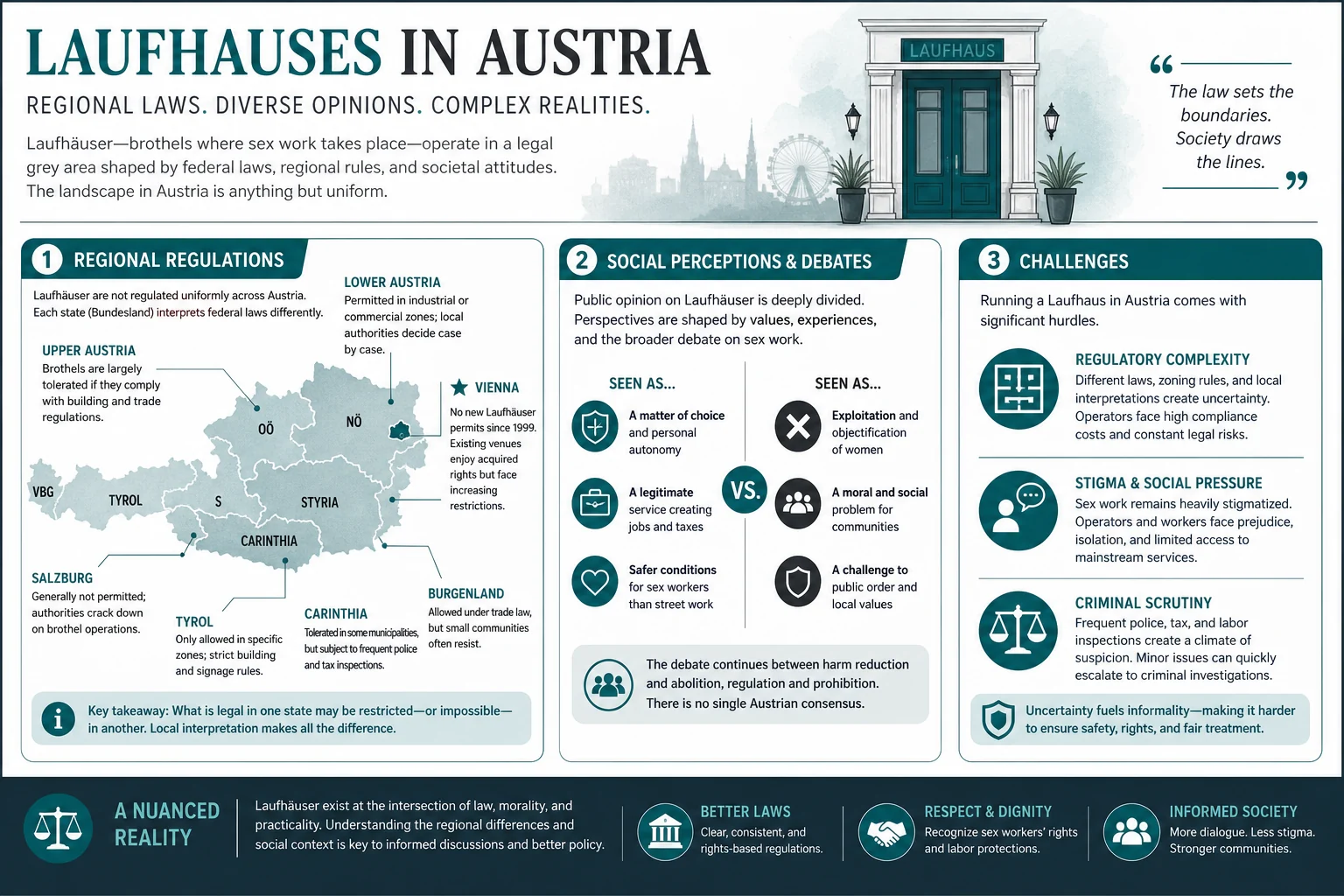
Austria’s federal structure means that each state (Bundesland) has some autonomy in regulating prostitution. For example, Vienna has specific policies that regulate Laufhauses with a focus on public order and health standards. Other states may have stricter or more lenient rules, impacting the operation of Laufhauses.
In Vienna, Laufhauses are generally legal if they comply with municipal regulations, which include obtaining the necessary permits and ensuring sex workers are registered and undergo health checks. The city also monitors Laufhauses to prevent criminal activities such as human trafficking and exploitation.
Social Perceptions and Public Debates
While Laufhauses are legal under certain conditions, public opinion in Austria can be divided. Some view Laufhauses as a pragmatic approach to regulating sex work, providing safer environments for sex workers compared to unregulated street prostitution. Others raise concerns about morality, neighborhood impact, and the potential for exploitation.
These debates sometimes influence local policy decisions, leading to stricter enforcement or limitations on Laufhaus operations in certain areas. Nonetheless, the trend in Austria leans towards maintaining a regulated system that balances public health, safety, and individual rights.
Challenges Faced by Laufhaus Operators and Sex Workers
Despite their legal status, Laufhauses and their occupants face several challenges. Regulatory compliance can be costly and complex, requiring ongoing interaction with municipal authorities. Sex workers must navigate both legal obligations and social stigmas, which can affect their personal and professional lives.
Moreover, Laufhauses remain targets for criminal investigations, especially related to human trafficking. Authorities are vigilant to ensure that these establishments do not become fronts for illegal activities. This constant scrutiny can create operational uncertainty for Laufhaus owners and workers alike.
Conclusion: Are Laufhauses Legal in Austria?
In summary, Laufhauses are legal in Austria under a regulated framework that governs prostitution nationwide. Their legal operation depends heavily on adherence to federal and state-specific laws, including registration, health regulations, and zoning requirements. While not without challenges, Laufhauses represent a legal and structured form of sex work that provides autonomy and safety for many workers.
Anyone interested in the Laufhaus legal Austria context should consider the local regulations of the specific state and city, as these significantly influence the legality and operation of such establishments. Overall, Austria’s approach exemplifies a modern, regulated stance on sex work that aims to protect workers while addressing public concerns.