

Vienna’s approach to regulating adult entertainment, including brothels, stands out for its balance between legal oversight and public health considerations. Understanding the Vienna brothel laws is essential for anyone interested in the legal framework governing these establishments, whether for business, research, or personal curiosity.
This article explores the key regulations, licensing requirements, and social implications related to brothels in Vienna.

Legal Framework Governing Brothels in Vienna
In Austria, prostitution itself is legal and regulated, but the rules can vary significantly at the state and municipal levels. Vienna brothel laws operate within a broader national context but are also shaped by local ordinances that address zoning, health standards, and business operations.
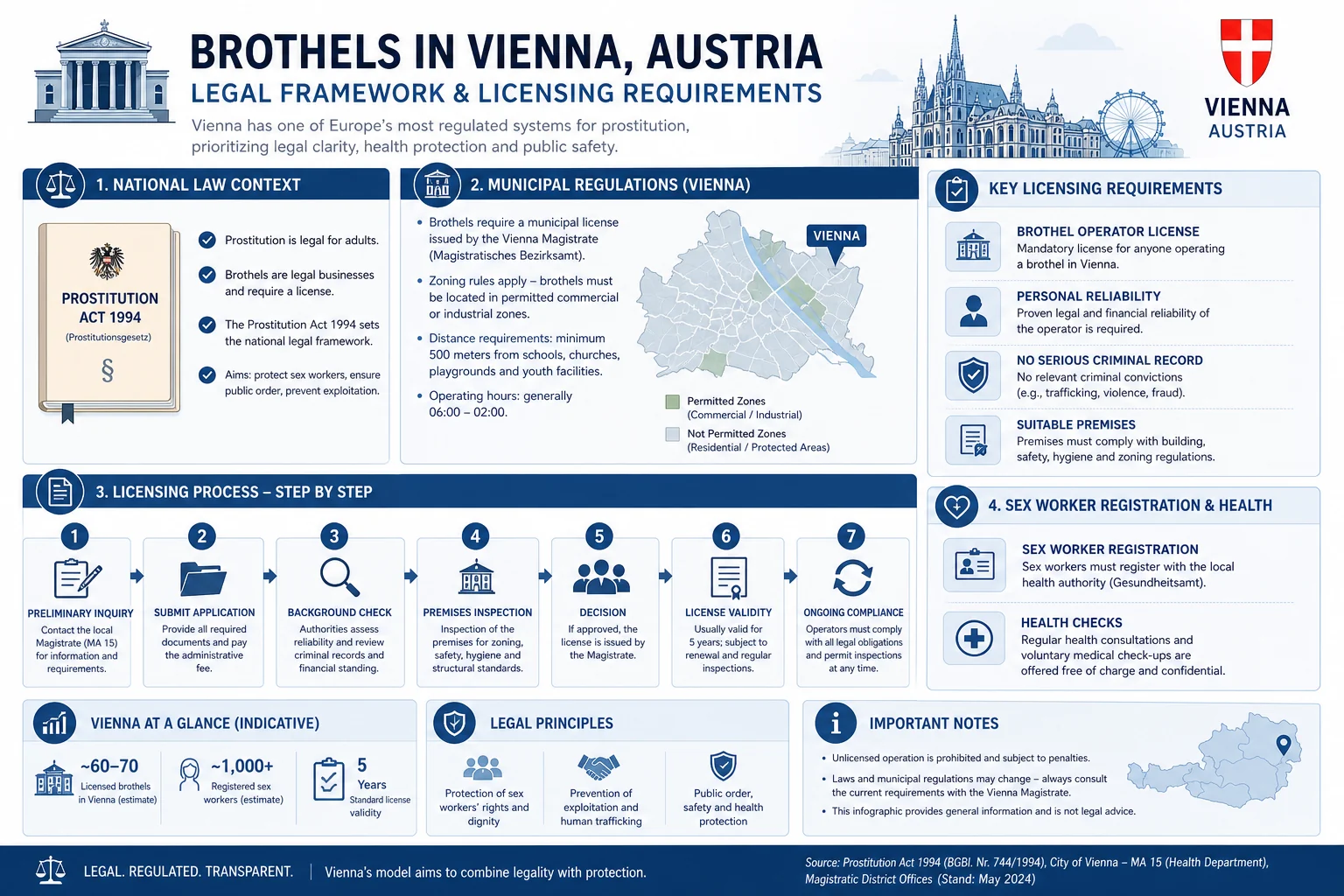
The primary legislation regulating prostitution in Austria is the Prostitution Act (Prostitutionsgesetz), enacted in 1994. This law legalizes sex work and sets out the rights and obligations of sex workers, operators, and clients. However, Vienna supplements this with municipal regulations that govern how brothels operate within city limits.
Licensing and Registration Requirements
One of the most critical aspects of Vienna brothel laws is the licensing system. Brothel operators must obtain a permit from the city authorities to legally run their businesses. This process involves several checks and requirements designed to ensure safety, legality, and public order.
Operators must provide detailed information about the premises, including location, security measures, and health facilities. The authorities also conduct background checks to prevent organized crime involvement and ensure that the business complies with labor laws.
Sex workers themselves are required to register with local health offices. This registration process includes regular health checks, which are mandatory to reduce the spread of sexually transmitted infections (STIs). While registration helps protect public health, it also provides sex workers with access to social services and legal protections.
Health and Safety Regulations
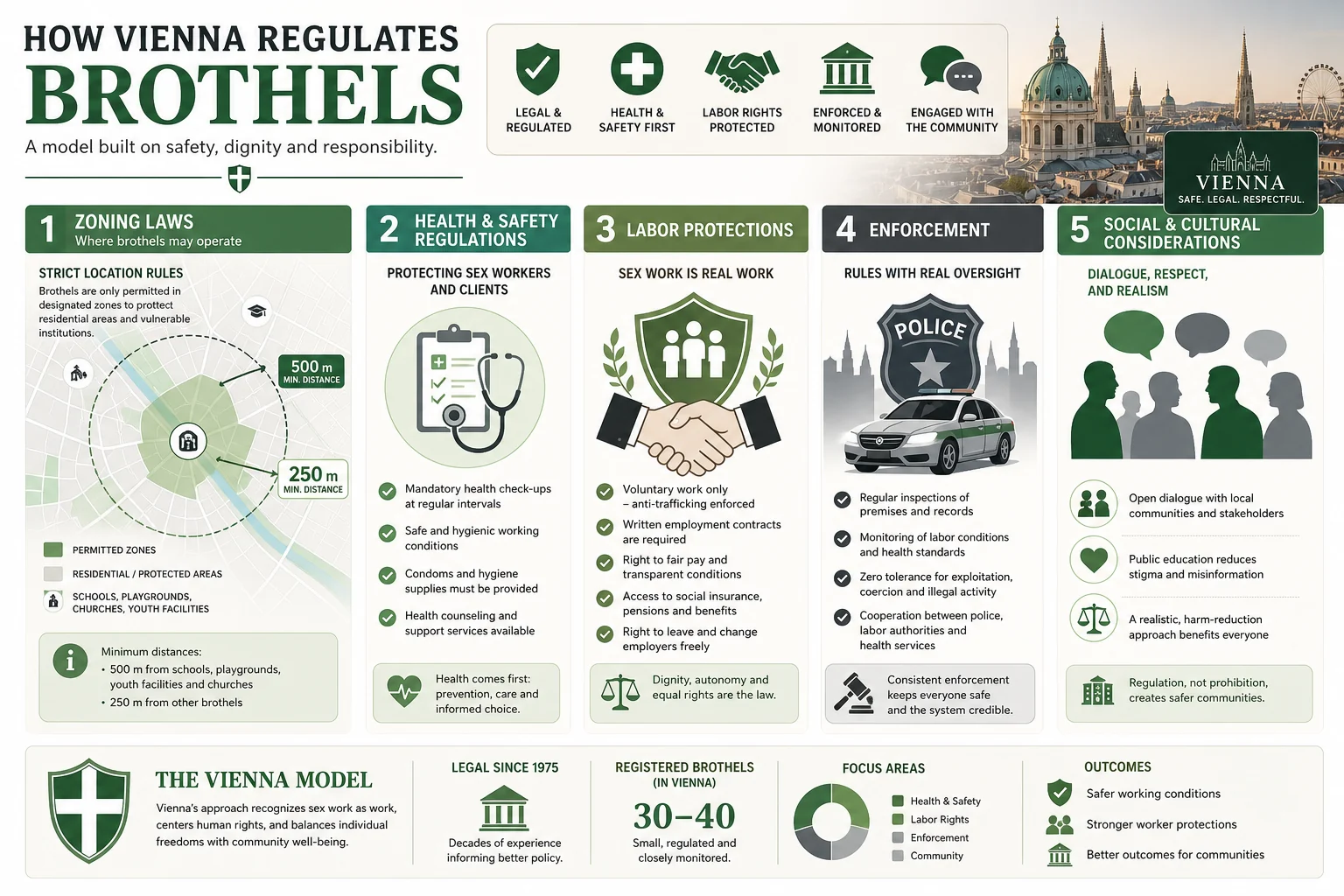
Health and safety are paramount concerns in the regulation of brothels in Vienna. The city enforces strict hygiene standards for premises and mandates access to health services for sex workers. Regular medical examinations for STIs are a legal requirement, and brothel operators must facilitate a safe working environment.
Additionally, condom use is strongly promoted and often enforced within brothels to protect both workers and clients. Failure to comply with these health regulations can result in fines, suspension of licenses, or closure of the establishment.
Zoning and Location Restrictions
Vienna brothel laws include specific zoning regulations that restrict where brothels can operate. These rules aim to balance the presence of adult businesses with community interests and urban planning considerations.
Brothels are typically allowed only in designated areas, often away from schools, churches, and residential neighborhoods. The city’s zoning laws specify minimum distances from such sensitive locations to minimize the impact on the surrounding community and maintain public order.
These restrictions mean that not all parts of Vienna are open to brothel operations, and potential operators must carefully select their premises to comply with these regulations.
Employment and Labor Laws for Sex Workers
Vienna’s approach to prostitution includes recognition of sex work as a form of labor, which brings with it certain legal protections. Sex workers in brothels have the right to work under safe conditions, negotiate terms, and access social benefits like health insurance.
Operators must comply with Austrian labor laws, which prohibit exploitation, trafficking, and forced labor. These laws also enable sex workers to report abuse or unsafe conditions without fear of legal repercussions related to their profession.
This framework aims to empower sex workers, improve their working conditions, and prevent human rights violations within the industry.
Enforcement and Penalties
Vienna authorities actively enforce brothel laws to maintain compliance and protect public interests. Inspections are conducted regularly, checking for licensing validity, health standards, and adherence to zoning laws.
Violations of Vienna brothel laws can lead to various penalties, including fines, license suspension, or permanent closure of the establishment. In serious cases involving human trafficking or exploitation, criminal charges can be brought against operators and offenders.
The enforcement approach in Vienna tends to focus on ensuring legality and safety rather than criminalizing sex work itself.
Social and Cultural Considerations
While Vienna brothel laws are primarily legal and administrative, they also reflect social attitudes toward prostitution in the city. Austria generally takes a pragmatic stance, recognizing sex work as part of society and focusing on regulation rather than prohibition.
This attitude helps reduce stigma and supports the integration of sex workers into the legal and social framework. Public health campaigns and social services further assist in addressing issues related to prostitution, such as addiction, violence, or poverty.
Community dialogue continues to shape the future of Vienna’s approach, balancing moral concerns, human rights, and urban development.
Conclusion
Vienna brothel laws represent a comprehensive regulatory system that balances legal oversight, public health, and social considerations. By requiring licenses, enforcing health and safety standards, and protecting labor rights, the city ensures that brothels operate within a controlled and transparent framework.
These laws provide a model for managing adult entertainment responsibly while respecting the rights and dignity of sex workers. Understanding Vienna brothel laws is crucial for anyone involved in or studying this sector, offering insight into how a modern European city addresses one of society’s more complex industries.