

Prostitution has a complex and often controversial place in societies worldwide. In Austria, however, it is legal and regulated under specific laws that aim to protect the rights and safety of sex workers while addressing public health and social concerns.
Understanding the prostitution laws Austria enforces requires a look into the historical, legal, and social frameworks that have shaped the country’s approach to this longstanding profession.

The Historical Context of Prostitution Laws in Austria
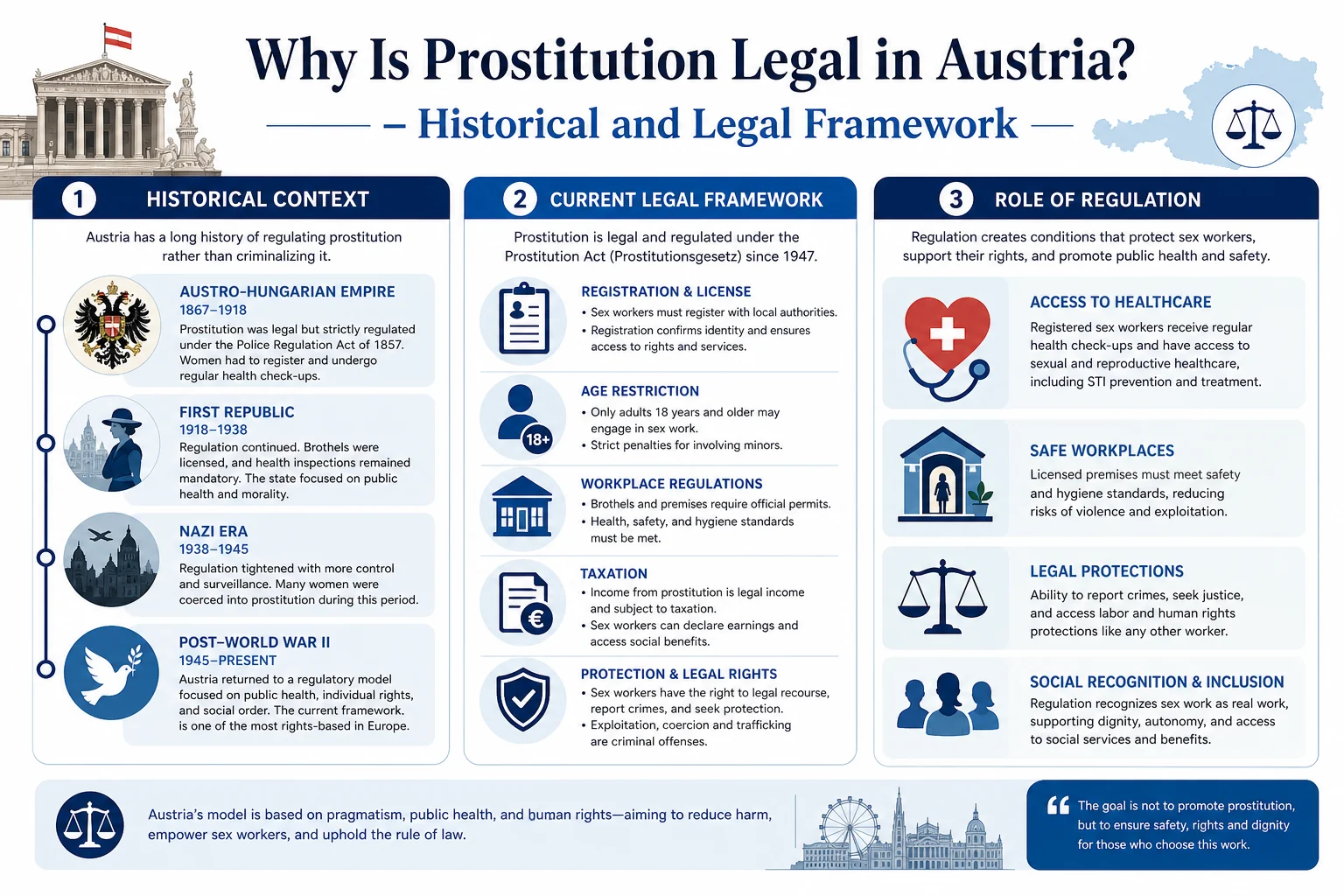
Prostitution in Austria has been subject to various legal frameworks throughout history. Dating back to the Austro-Hungarian Empire, prostitution was tolerated but strictly regulated. The primary goal of these regulations was to control sexually transmitted diseases and maintain public order. Over time, as societal attitudes evolved, so did the legal stance.
After World War II, Austria saw a shift towards more progressive policies, reflecting broader European trends. The focus gradually moved from criminalization to regulation, aiming to provide sex workers with legal protections and reduce the risks associated with underground prostitution.
Current Legal Framework Governing Prostitution in Austria
Today, prostitution is legal and regulated in Austria, but the laws vary slightly between federal states. The main principles, however, are consistent nationwide:
- Registration: Sex workers must register with local authorities and undergo regular health checks to ensure public safety.
- Age restrictions: Only adults aged 18 and above are legally allowed to work in prostitution.
- Workplace regulations: Brothels and other sex work venues must comply with licensing requirements and health regulations.
- Taxation: Income from prostitution is taxable, and sex workers are expected to declare their earnings.
- Protection measures: Laws are in place to protect sex workers from exploitation, trafficking, and violence.
These regulations aim to balance the rights of sex workers with public health and safety concerns. By making prostitution legal and regulated, Austria attempts to reduce the risks associated with illegal sex work, such as human trafficking and exploitation.
The Role of Regulation in Protecting Sex Workers
One of the key reasons prostitution remains legal in Austria is the country’s commitment to safeguarding the welfare of sex workers. The registration process, for example, is designed to provide access to healthcare services and legal protection. Registered sex workers benefit from regular medical examinations, which help control the spread of sexually transmitted infections (STIs).
Additionally, the legal framework grants sex workers the right to work in safe and controlled environments. Licensed brothels must adhere to strict hygiene standards and ensure security measures are in place. This reduces the likelihood of abuse and exploitation and allows sex workers to report crimes without fear of legal repercussions.
Prostitution Laws Austria and Human Trafficking Prevention
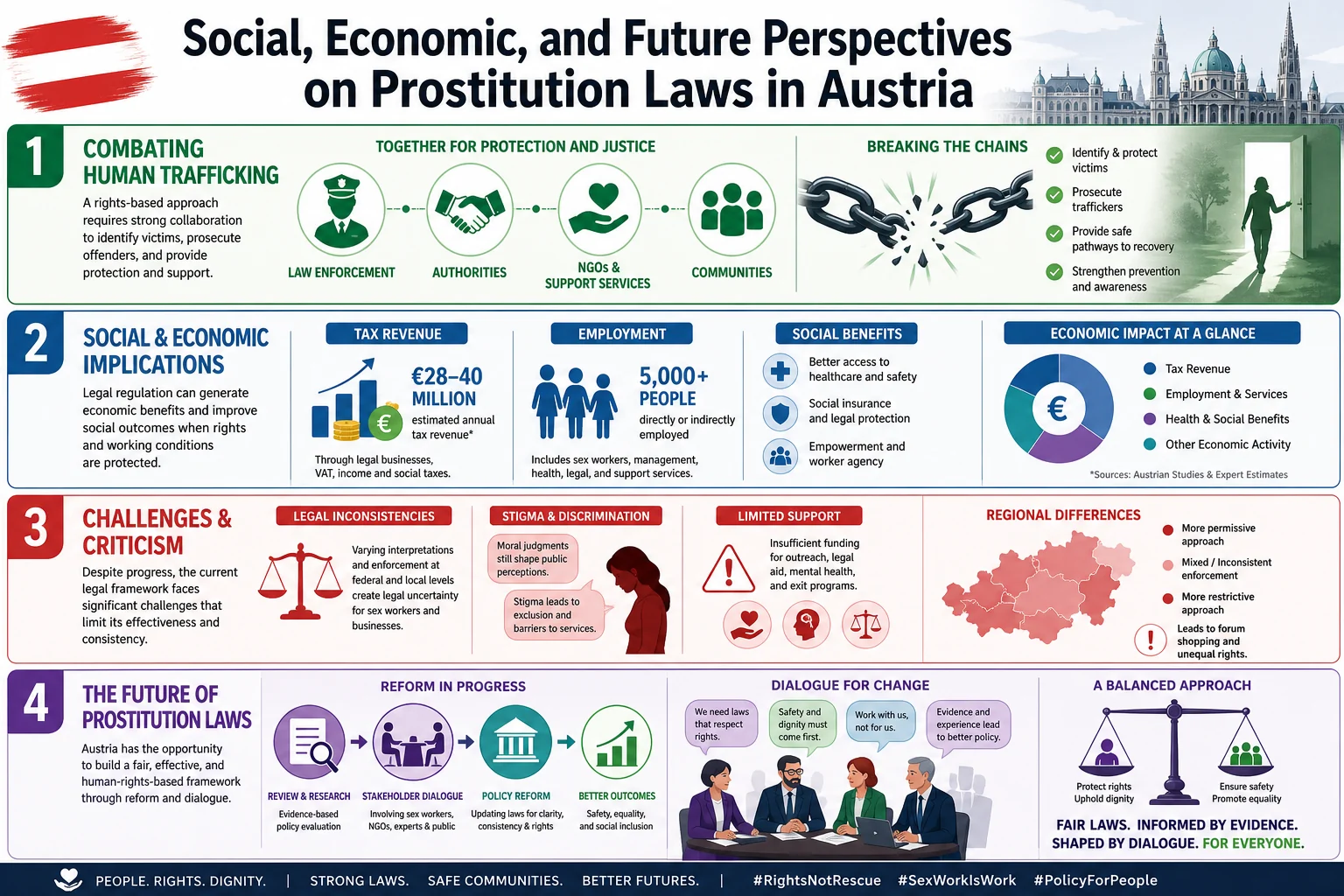
While prostitution itself is legal, Austria actively combats human trafficking and forced prostitution. The distinction between consensual sex work and trafficking is a significant aspect of the country’s laws. Authorities work closely with NGOs and international organizations to identify and assist victims of trafficking.
Legal prostitution provides a transparent framework that helps law enforcement monitor and address illegal activities. By regulating the industry, Austria aims to create an environment where exploitation is minimized and victims receive the support they need.
Social and Economic Implications of Legal Prostitution in Austria
Legalizing and regulating prostitution has had various social and economic impacts on Austrian society. Economically, the industry contributes to tax revenues and employment opportunities. Sex workers who operate legally can access social security and healthcare benefits, improving their overall quality of life.
Socially, legal prostitution challenges traditional stigmas and encourages open dialogue about sexuality and workers’ rights. While stigma still exists, Austria’s approach fosters greater acceptance and understanding, which can lead to better support systems for sex workers.
Challenges and Criticisms of Prostitution Laws in Austria
Despite the progressive framework, prostitution laws in Austria face criticism from different perspectives. Some argue that legalization does not fully eliminate the risks of exploitation and abuse. Others believe that the laws do not go far enough in providing comprehensive social support to sex workers, such as access to education or alternative employment options.
Moreover, the varying regulations across federal states can create inconsistencies in enforcement and protection. Some regions may have stricter rules or lack adequate resources for monitoring and support, leading to disparities in sex workers’ experiences.
The Future of Prostitution Laws in Austria
Austria continues to review and adjust its prostitution laws to address emerging challenges. Discussions often focus on improving the balance between regulation and the autonomy of sex workers, enhancing support services, and strengthening efforts against trafficking.
As public attitudes toward sex work evolve, there is potential for further reforms aimed at expanding rights and protections. The ongoing dialogue between policymakers, sex workers, and advocacy groups plays a crucial role in shaping the future legal landscape.
Conclusion
The legalization and regulation of prostitution in Austria reflect a pragmatic approach that prioritizes public health, safety, and human rights. By maintaining clear legal frameworks, Austria seeks to protect sex workers from exploitation while addressing societal concerns. The prostitution laws Austria enforces provide a model for balancing regulation with respect for individual freedoms, though challenges remain in ensuring fairness and consistency across the country.
Understanding these laws helps shed light on why prostitution is legal in Austria and highlights the ongoing efforts to create a safer and more equitable environment for everyone involved.