

In Austria, the regulation of brothels is taken seriously, particularly regarding the health and safety of the women working in these establishments. Austrian brothel health checks are an essential part of maintaining public health and ensuring that sex workers receive appropriate medical care.
This article explores how often girls in Austrian brothels are tested, what these health checks entail, and the broader context of health regulations within the Austrian sex industry.

Legal Framework for Health Checks in Austrian Brothels
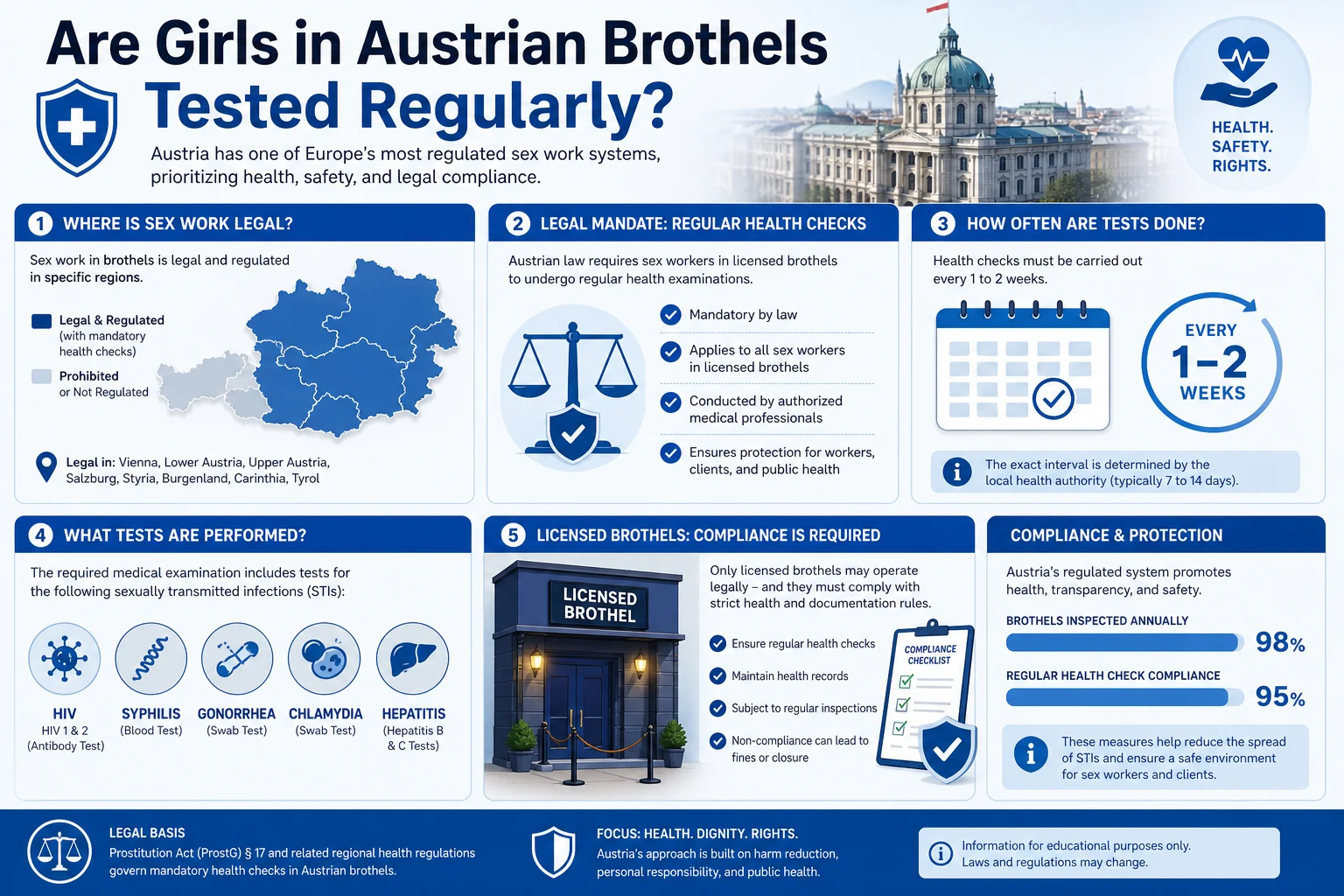
Prostitution is legal and regulated in Austria, with specific rules varying by region. The government mandates regular health checks for sex workers to minimize the risk of sexually transmitted infections (STIs) and other health concerns. These regulations aim to protect both the workers and their clients, promoting a safer environment overall.
Health checks are typically required by law and are part of a broader licensing system for brothels. Operators must ensure that sex workers comply with these health regulations to maintain their business licenses. Failure to adhere to these rules can result in penalties or closure of the establishment.
Frequency of Health Checks for Girls in Austrian Brothels
One of the key questions people ask is how often girls working in Austrian brothels undergo health examinations. Generally, sex workers are required to have health checks every one to two weeks. This frequent testing schedule is designed to catch any infections early and provide timely treatment.
The health checks typically include screening for common STIs such as HIV, syphilis, gonorrhea, chlamydia, and hepatitis. In addition to testing, workers often receive counseling and advice on safe sex practices. These regular appointments are crucial for maintaining individual health and preventing the spread of infections.
What Do Austrian Brothel Health Checks Include?
Health checks in Austrian brothels are comprehensive. They usually involve a physical examination, laboratory tests, and sometimes psychological support. The physical exam focuses on signs of infections and other health issues related to the nature of the work.
Laboratory tests are the heart of the screening process. Blood tests are used to detect HIV, syphilis, and hepatitis, while swabs and urine samples help identify bacterial infections like gonorrhea and chlamydia. If any infections are detected, immediate treatment is arranged to prevent further transmission.
In some regions, health checks also include testing for tuberculosis, especially if the worker comes from countries with higher TB rates. This ensures a thorough approach to public health within the brothel system.
Confidentiality and Rights of Sex Workers During Health Checks
Respecting the privacy and rights of sex workers is a fundamental part of the health check process. Austrian law ensures that all medical information obtained during these checks remains confidential. Workers are not required to disclose their health status to clients, and the results are handled with strict privacy protocols.
Moreover, sex workers have the right to refuse treatment or testing, although doing so may affect their ability to work legally in a regulated brothel. The health system strives to provide a non-judgmental and supportive environment, encouraging workers to prioritize their health without fear or stigma.
Role of Brothel Operators in Ensuring Regular Health Checks
Brothel operators play a significant role in maintaining regular health checks as part of their duty to comply with Austrian regulations. They are responsible for ensuring that all working girls undergo mandatory medical examinations and that records are kept up to date.
Operators often collaborate with local health authorities and clinics specializing in sexual health to facilitate these checks. This cooperation helps streamline the process and ensures that workers receive timely care. It also benefits the business by upholding a reputation for safety and professionalism.
Benefits of Regular Austrian Brothel Health Checks
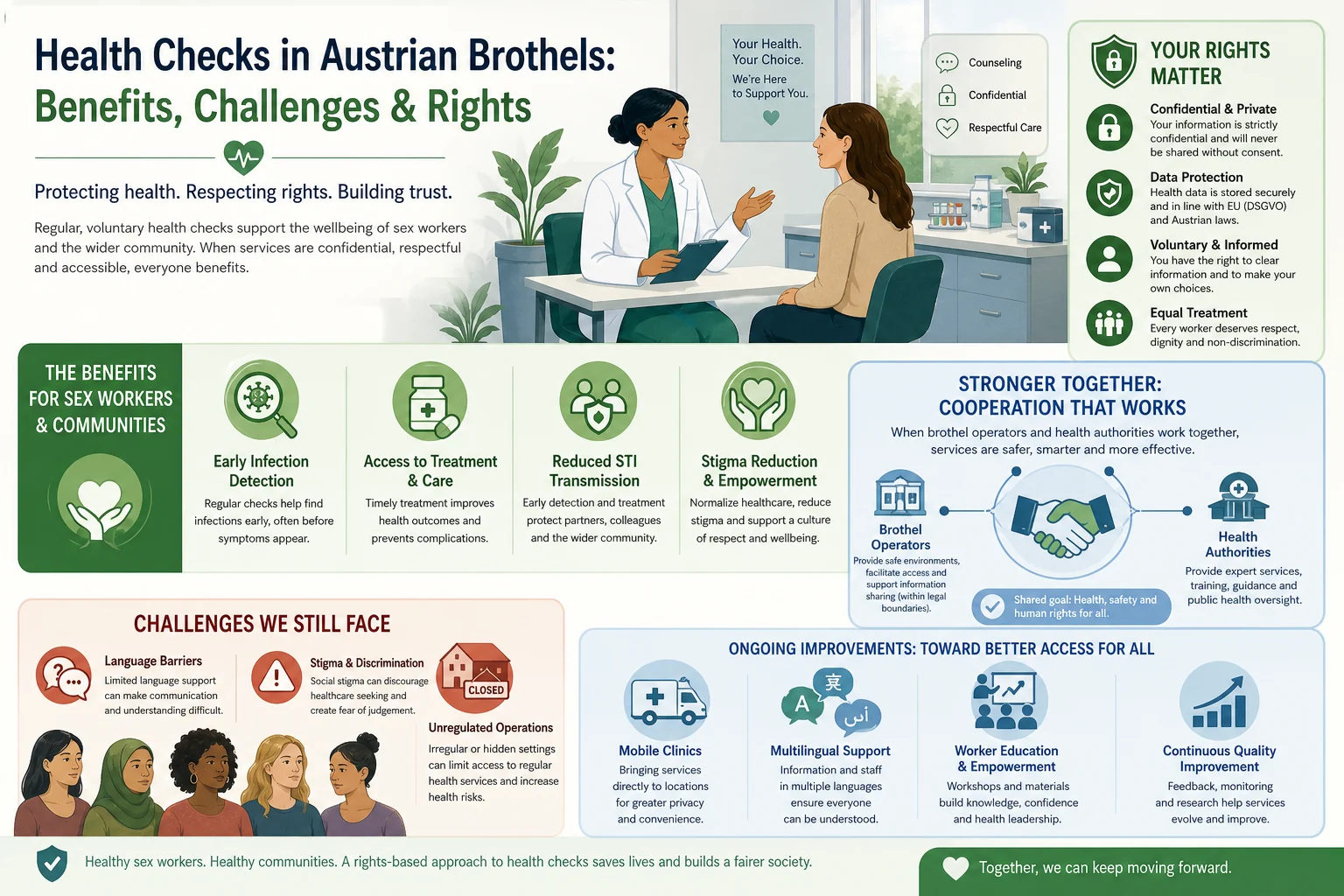
The implementation of regular health checks in Austrian brothels brings multiple benefits. For the sex workers, regular screenings mean early detection of infections, access to treatment, and better overall health outcomes. This reduces absenteeism and long-term health complications.
From a public health perspective, these checks significantly lower the spread of STIs within the community. Clients also feel safer knowing that the workers they interact with are regularly tested and treated if necessary. This contributes to a healthier, more responsible sex industry.
Additionally, regular health checks help combat stigma by normalizing medical care for sex workers and acknowledging their rights to healthcare. This approach fosters a more inclusive and supportive environment.
Challenges and Ongoing Improvements
While Austrian brothel health checks are comprehensive, there are challenges to consider. Some sex workers might face barriers such as language difficulties, fear of discrimination, or lack of awareness about their rights. Certain unregulated or underground operations may not adhere to these health standards, posing risks.
Authorities and advocacy groups continue to work on improving outreach, education, and access to healthcare services. Innovations such as mobile clinics and multilingual support aim to make health checks more accessible to all sex workers, regardless of their background or status.
Conclusion
Austrian brothel health checks are a well-established and integral part of the country’s approach to regulating prostitution. Girls working in these brothels are tested regularly, often every one to two weeks, with extensive screenings for STIs and other health conditions. These health checks protect the well-being of sex workers and clients alike, contributing to a safer and more responsible industry.
Through strict legal frameworks, operator cooperation, and ongoing improvements, Austria maintains a balanced system that respects the rights of sex workers while prioritizing public health. Regular testing in brothels not only benefits individual health but also helps reduce the spread of infections on a wider scale, making it a crucial component of Austria’s public health strategy.